FEOC origin materials – even 3 levels deep – create potential supply chain risk.
How do you determine your exposure, and what are your options?
Executive Order 14415 moved the line from "who sold it to you" to "where it came out of the ground."
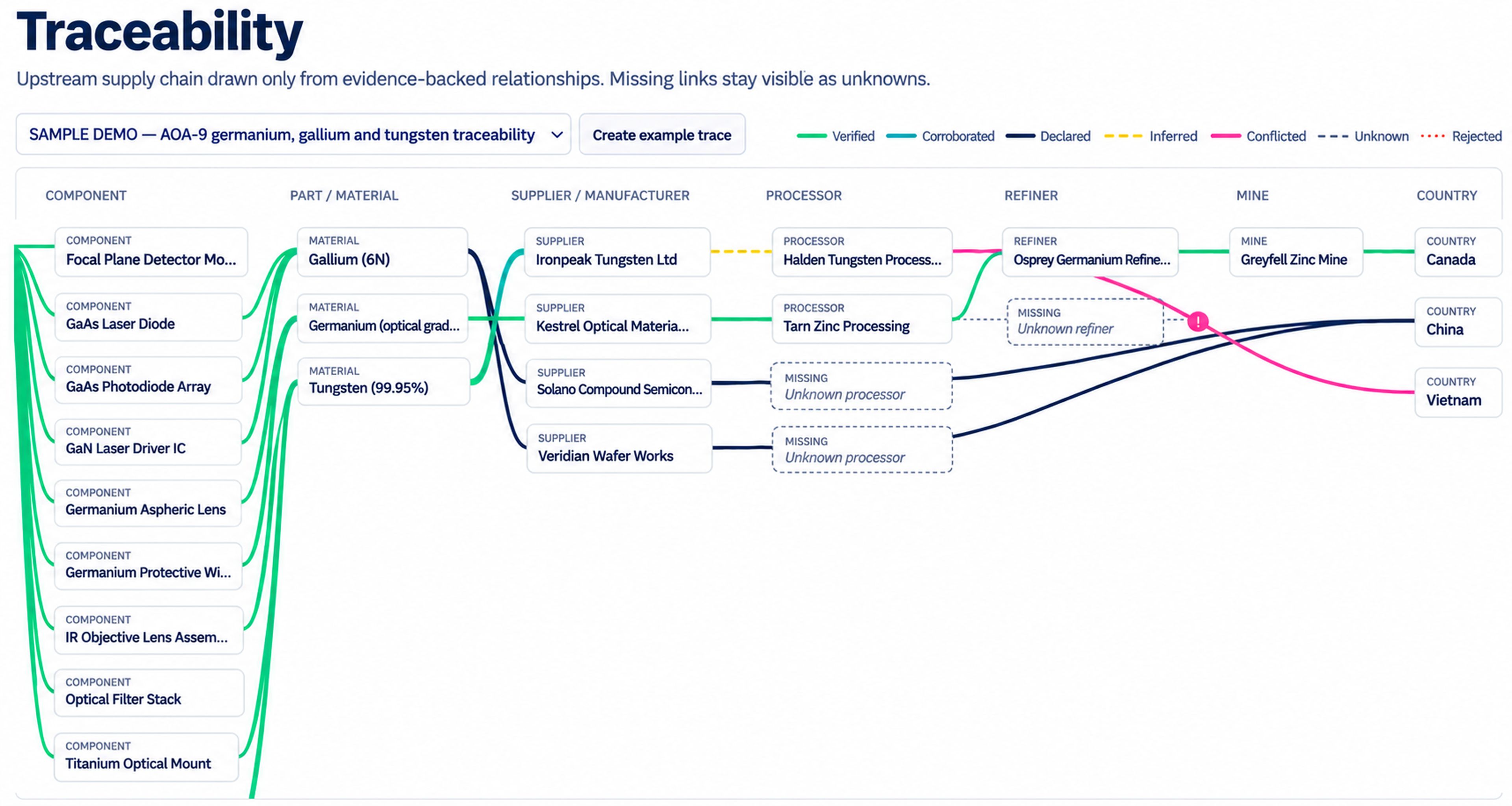
Map every tier
Prime contractors and subcontractors must submit a bill of materials that traces every component, part, piece of equipment, software and material back to the origin of its raw materials.
The easy waiver is gone
"We couldn't find it anywhere but China" no longer works. Continued use of covered material from a restricted country now takes a formal mitigation plan: proof of an exhaustive search, the material's origin and a timeline to move off it.
Vet every supplier
Contractors must screen suppliers for foreign ownership or control, financial distress and manufacturing risk, then replace the ones that don't hold up. Getting it wrong puts contracts at risk.
The deeper you look, the less you can see.
Most contractors know their direct suppliers well. A level down it gets harder. Below that, at the refiners, processors and mines, the picture is opaque at best. That's where critical-material exposure tends to hide, and it's where the new rules now reach.
NexGen works with a technology partner that makes those lower tiers visible.
See how we can help →-
TIER 1Your direct suppliersContracts, contacts, paperwork. Usually clear.CLEAR
-
TIER 2Their suppliersKnowable, with effort and cooperation.PARTIAL
-
TIER 3+Refiners, processors, minesOpaque at best. Often routed through intermediaries.OPAQUE
-
ORIGINRaw-material origin: where the requirement now ends.
"This is not paperwork. It is battlefield preparation."
One compliant supplier isn't supply chain security.
A map shows you the risk. Security means acting on it, and having more than one qualified source when a supplier fails or falls out of compliance. Where does your program sit?
Assess
Working out what's in the bill of materials and who supplies it.
Illuminate
Some origin data is in hand and being studied.
Improve
The data is actionable, and sourcing is actively changing.
Monitor
In good shape, and watching for what changes next.
See the whole chain. Then fix the weak links.
NexGen works on both sides of the problem. With a technology partner, we help primes and suppliers see where their materials actually come from. And where the answer is the wrong one, NexGen is building lower-cost, U.S.-based processing routes so the trail ends somewhere you can stand behind.
See the materials we're working on →-
01Supply chain visibilityThrough our technology partner, map the tiers below your direct suppliers and trace materials back toward their origin.
-
02Domestic processingU.S.-based routes for ATO, titanium, iodine and lithium, aimed at the steps where foreign control is highest.
-
03Origin you can documentProcesses designed with traceability in mind, so origin questions have answers.
-
04A second sourceAnother qualified option, so a single supplier isn't the whole plan.
Working through the new sourcing rules?
Primes, suppliers and program offices: tell us which materials are on your list, or where your map goes dark, and we'll follow up.